Мелодия · The Melodic Language
Many Bulgarian village melodies are usefully heard through modes, while urban, arranged and classical repertories also use major-minor tonality and mixed practices. Folk tunes often move in narrow, ornamented steps around a tonal centre, and one important Balkan colour is the augmented second — the gap you hear below between Ab and B. All examples are on G; press play and follow the highlighted notes.
Школа по мелодия · Melody School
In many close-range village songs, melodic identity is carried as much by how each note is attacked, shaken and left as by pitch contour. The articulations below are not decoration applied to a tune; strip them out and what is left is not a plainer Bulgarian melody, it is a different music altogether.
Each one is played here on G so you can hear it against the plain note. The definitions are the ethnomusicological ones, and the region matters: the same-named cry points up in one part of the country and down in another.
Къде се слага · Where the articulation goes
Knowing the gestures is half of it; the other half is knowing where they belong. The tresene lives on a long held note — it needs length to shake. The provikvane belongs at the end of a phrase, and the atsane at the end of a half-sentence. Put one somewhere it does not go and the phrase stops sounding Bulgarian, however well you sing it.
Click a note to cycle through the articulations, then hear your phrase.
Ладовете · What the melodies actually use
Фразата · The shape of a Bulgarian phrase
Мелодии · The tune library
Real Bulgarian dance melodies, each one playing in its own uneven meter with the tupan underneath — Chetvorno in seven, Daichovo in nine, Gankino and Krivo Horo in eleven, Bucimis in fifteen, Sedi Donka in twenty-five. Switch the tresene on and the long notes get the throat shake, falling below the note as it should.
Чуй мелодията · Hear the melodic language
Kaval, gaida and the ornament vocabulary, in real performances.
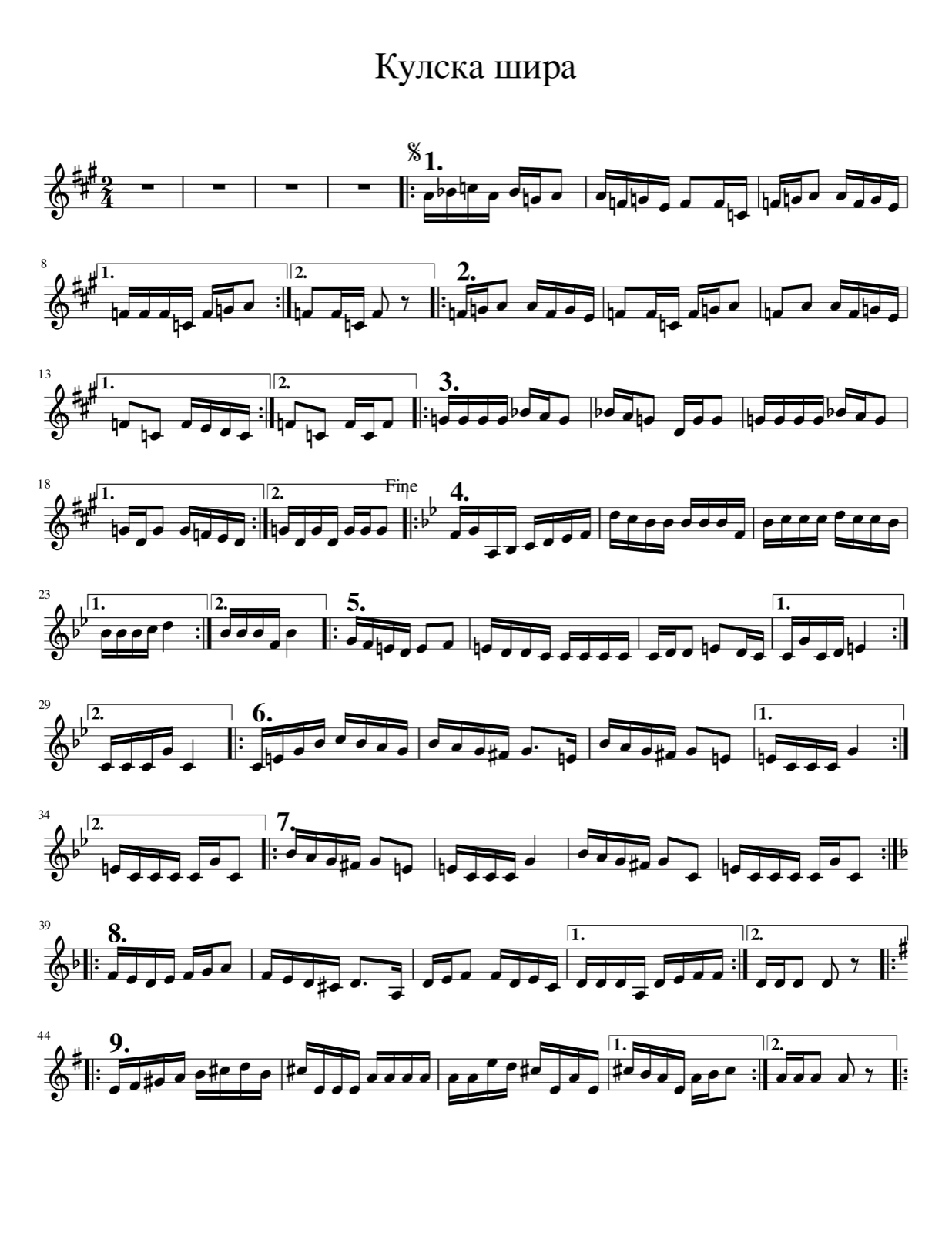
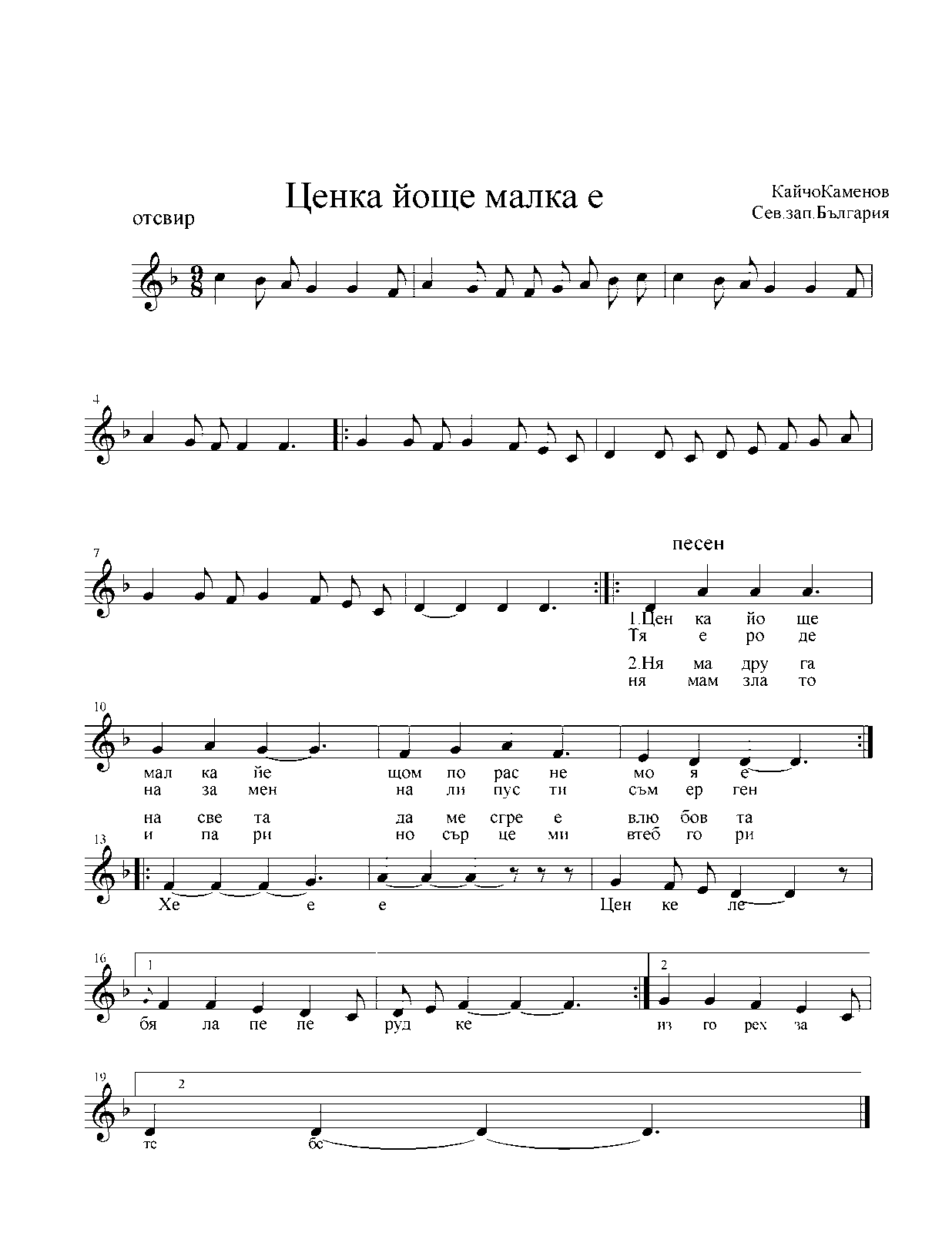
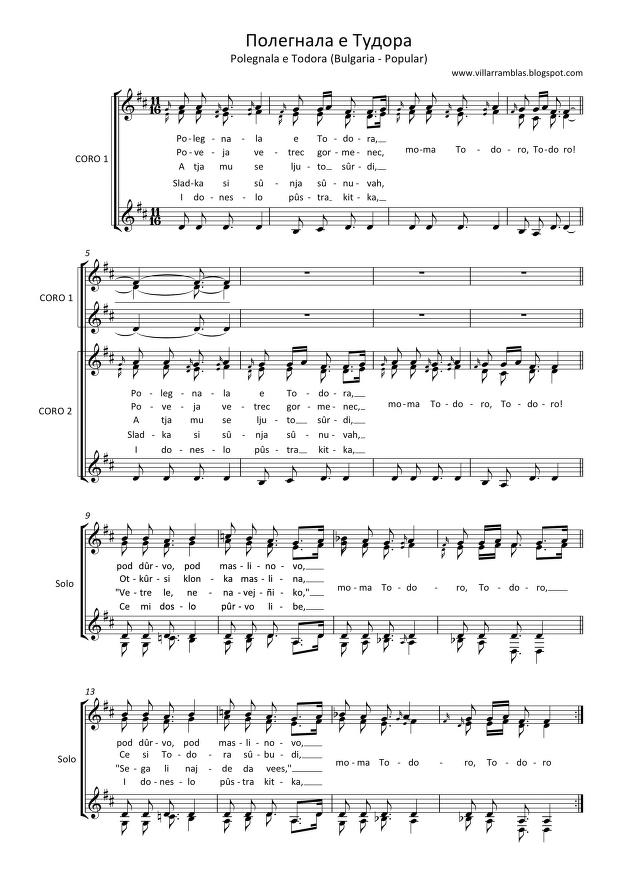
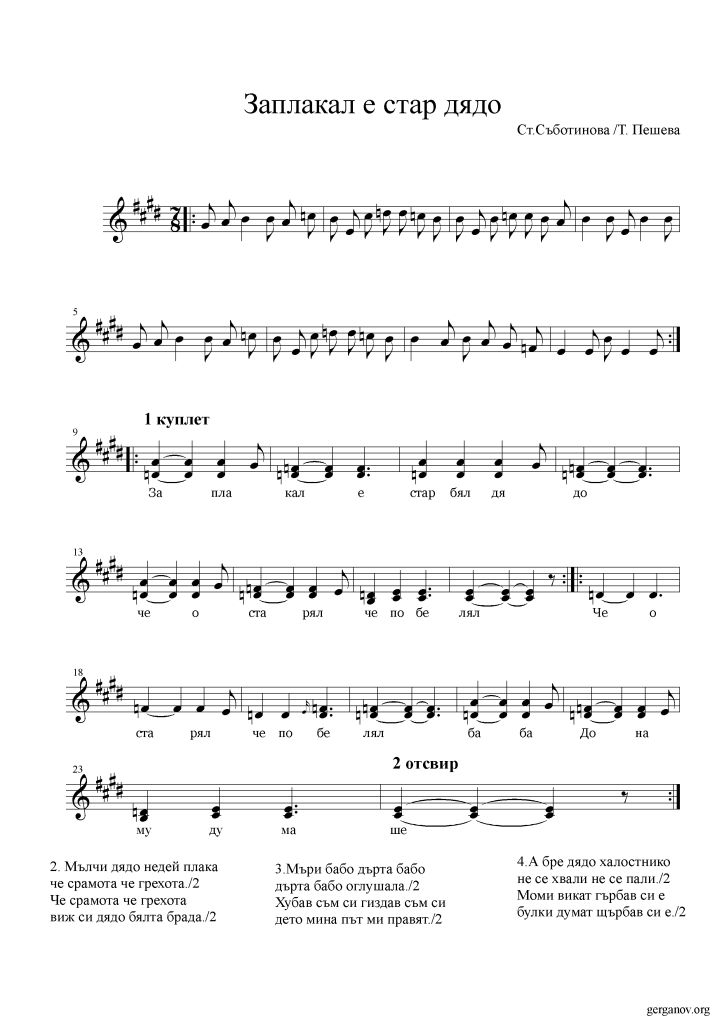
Нотите · The scores themselves
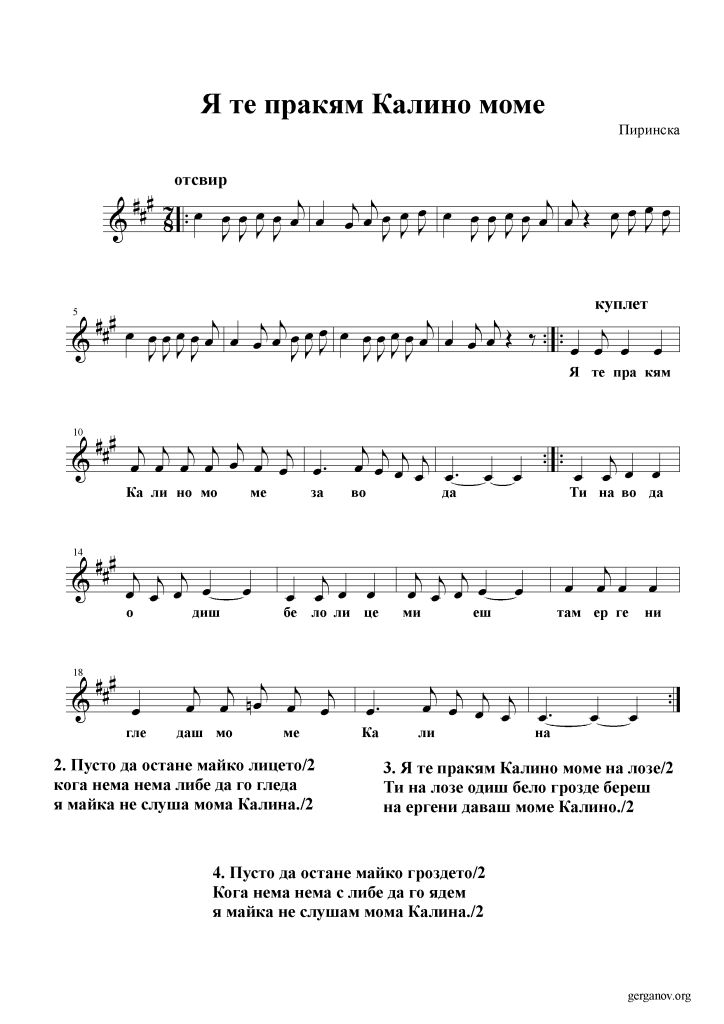
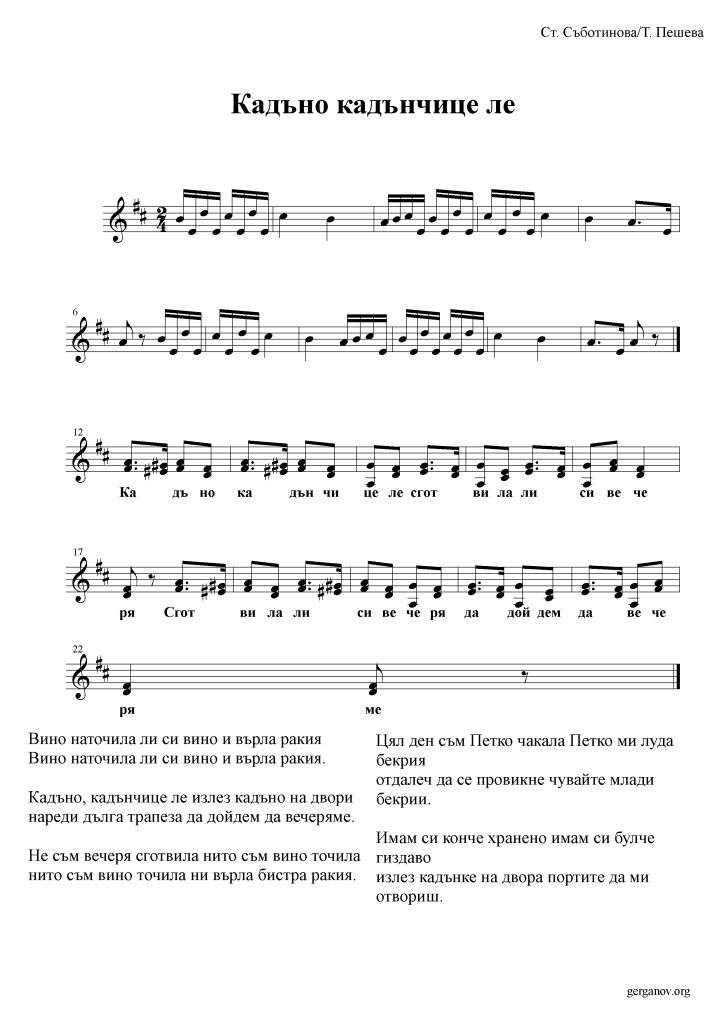
Not descriptions of the music — the music. These are the actual Bulgarian scores, freely licensed, reproduced here so you can read the notation directly: the chromatic turns, the ornament marks, the two-voice writing. Click any one to open it full size.
Мелодиите · The tunes themselves
A horo name often identifies a dance or dance family, not one fixed tune. Many melodies can serve the same dance, while names such as Eleno Mome and Sedi Donka also identify songs in their own right. The relationship among tune, dance, name and locality is repertory-specific rather than a single national rule.
Below are Bulgarian scores under open licences, each linked to its source so you can read the notation and provenance. Several are transcriptions connected to named singers; others are arrangements or notated examples, and each card identifies what it is.